
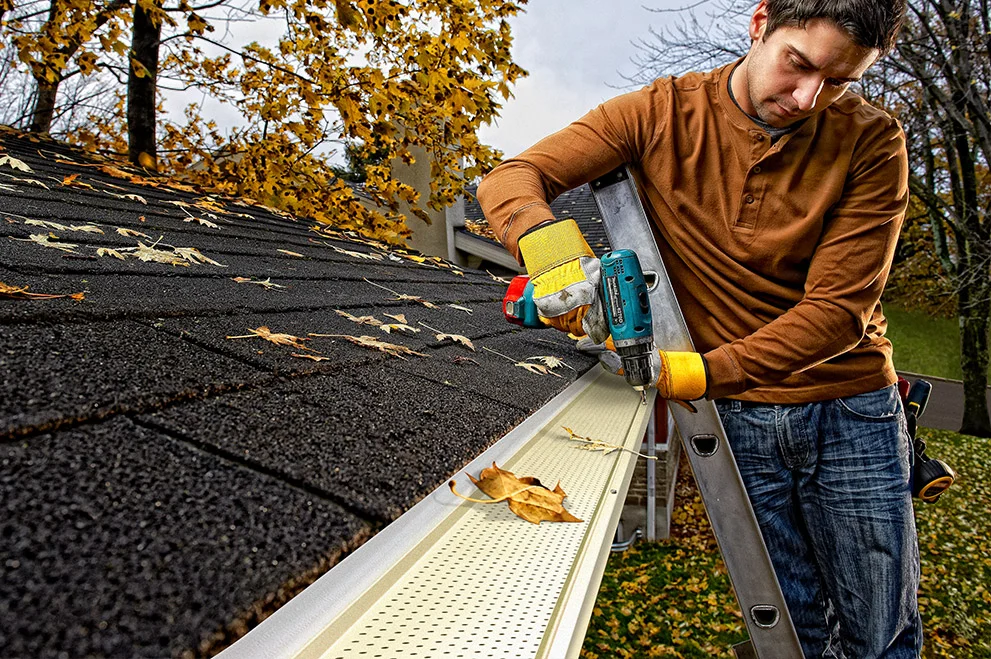
The first big storm of the fall tends to show you how your gutters are really doing. Take this week’s past storm as an example. Wind-driven rain, fallen branches, and a season’s worth of debris all land on the same system at once, and a gutter that looked fine in August can show its weak points overnight. Some of that damage is easy to spot from the driveway. Some of it stays hidden for weeks and only shows up later as a leak, a stained wall, or rotting wood behind the gutter. This guide walks through what storms do to gutters, the warning signs worth checking for after one, and what to do next.
Why Vancouver Storms Are Hard on Gutter Systems
Metro Vancouver’s wettest, windiest weather arrives in late fall and winter, and a gutter system has to handle all of it. Several things happen at once during a storm:
- Heavy volume. A downpour sends a large amount of water off the roof in a short time. If the gutters or downpipes are partly blocked, the water has nowhere to go and spills over the edge.
- Wind-driven rain. Wind pushes rain sideways and into places it would not normally reach, including behind the gutter, where it can reach the fascia board.
- Falling debris. Branches, needles, and leaves land in the gutters and add weight. Wet debris is heavier than dry, and a full gutter puts extra strain on its hangers and fasteners.
- Impact. A branch that strikes a gutter can dent it, bend it, or pull a section away from the house.
A system that was already close to the end of its life, with loose hangers, worn seams, or a gutter that sits at the wrong slope, tends to show it first. That is why the weeks after a storm are a good time to take a careful look.
Visible Signs of Storm Damage
Start from the ground. You can learn a lot by walking around the house and looking up at the roofline, ideally in daylight once the rain has stopped. Look for:
- Sagging or pulled-away sections. A gutter that dips in the middle or sits away from the fascia has usually lost some of its fasteners or is carrying too much weight.
- Bent, dented, or crushed sections. These are common after a branch strikes the gutter, and a dent can stop water from flowing properly.
- Separated corners and seams. Gaps at the corners or joints are where leaks tend to start.
- Loose or detached downpipes. A downpipe that has pulled away or been knocked out of position sends water straight against the wall or foundation.
- Overflow marks. Water streaks down the siding, or soil washed out of the garden bed directly below the gutter, point to water spilling over the edge instead of draining.
- Debris pile-ups. Branches or heavy buildup sitting in the gutter are a clear sign that it needs attention.
Damage That Isn’t Immediately Visible
Some storm damage does not look like much on the day. It shows up later, often after several weeks of ordinary rain, which is why it is easy to miss and easy to blame on something else. Watch for:
- Slow leaks at corners and seams. A joint that was stressed during a storm may only start dripping once it has been through a few more rainfalls.
- Fasteners that have loosened. Hangers can work loose under the weight of wet debris without any visible change at first, then let a section sag later.
- A change in slope. If part of the gutter has shifted, water can sit in it instead of draining. Standing water adds weight, and over time it can stain, corrode, and strain the system further.
- Water near the foundation. Damp soil, pooling water, or moisture in a basement or crawlspace after rain can mean the gutters or downpipes are no longer moving water away from the house.
None of these require a ladder to notice. They show up in how your home behaves during and after rain, which is why a second look during the next rainfall is worth the few minutes it takes.
What to Do Right After a Storm
A calm, simple routine is enough for most homeowners.
- Stay safe first. Do not climb a ladder in wind or wet conditions, and keep clear of any gutter or downpipe that looks like it could fall. Check from the ground.
- Walk the roofline. Once the weather settles, look at each side of the house for the signs listed above, and take photos of anything that looks wrong.
- Watch the next rainfall. Stand outside or look from a window while it rains. Water spilling over the edge, dripping from a seam, or running down the wall tells you where the problem is.
- Arrange an assessment. If you see damage, or if something seems off but you cannot tell what, have a professional look at the system. A section that has been bent, struck, or pulled away is best dealt with promptly, before another storm adds to it.
If your gutters are already worn or damaged, a leaf screen can also reduce the debris load heading into the next storm season. Our post on whether leaf screens are worth the investment covers that in more detail, and our guide to how often to clean your gutters in Vancouver explains how routine cleaning helps your system cope with heavy rain.
Insurance and Gutter Repair
Many homeowners wonder whether storm damage to gutters is covered by their home insurance. The answer depends on your policy, so the most reliable step is to read it or call your insurer. In general, home insurance policies tend to treat sudden damage, such as a gutter struck by a falling tree branch, differently from damage caused by gradual wear or a lack of maintenance. Wind, falling trees, and similar events are the kind of thing people most often ask their insurer about.
A few practical steps can help if you think you may have a claim:
- Document the damage. Take dated photos before anything is moved or cleaned up.
- Contact your insurer early. Ask what your policy covers, what your deductible is, and what the claim process looks like.
- Compare the cost with your deductible. For a small repair, the cost may be lower than the deductible, and your insurer can help you work that out.
- Get a written estimate. A written estimate that spells out the work needed gives you something concrete to share with your insurer.
When gutters are damaged by something like a vehicle, a tree, or a branch, our approach is to replace the damaged section so the system works as it should. If the damage is spread across the system, or the gutters were already worn, replacing the full system is often the more practical choice. Our post on how to know when it’s time for gutter replacement explains the signs, and our guide to whether it is cheaper to repair or fully replace gutters can help you decide which route suits your home.
Frequently Asked Questions
How soon after a storm should I check my gutters?
As soon as it is safe to do so. Look from the ground once the wind and rain have settled, then look again during the next rainfall, since some problems only show up when water is actually running through the system.
Can I check my gutters myself after a storm?
You can do a first check from the ground, looking for sagging, bent sections, loose downpipes, and overflow marks. Avoid climbing a ladder in wind or wet weather. If something looks damaged or you cannot tell what is wrong, a professional assessment is the safer choice.
Can storm damage lead to fascia rot?
It can. If water repeatedly gets behind a damaged or pulled-away gutter, the fascia board and soffit can stay damp, and wood that stays damp may eventually soften and rot. Catching a leak early is the best way to avoid that.
Does Vancouver Gutters repair damaged gutters?
When a section of gutter has been damaged, for example by a vehicle or a tree branch, we replace that section. We do not re-secure or seal old gutter systems. If the damage is widespread or the gutters were already near the end of their life, we will tell you if full replacement makes more sense.
Will my home insurance cover storm damage to my gutters?
It depends on your policy and on the cause of the damage. Sudden damage and gradual wear are often treated differently, so contact your insurer to find out what is covered, what your deductible is, and how to make a claim.
Get Your Gutters Assessed Before the Next Storm
If your gutters took a hit this season, or you are not sure how they held up, the most reliable way to find out is a direct assessment of your system. Learn more about our gutter repair and replacement services or request a free quote and we will give you a straightforward answer for your home.


